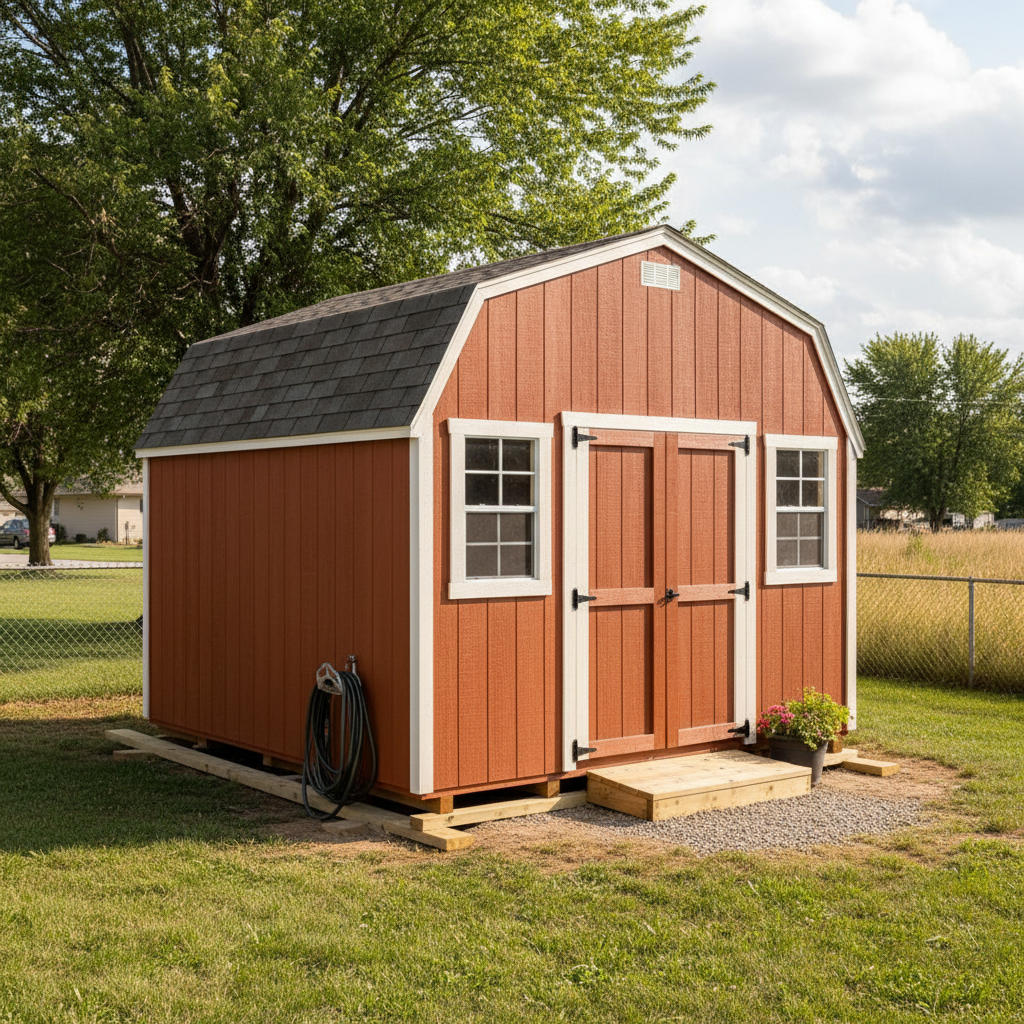
So, you've decided to get a new shed. Great idea! Whether it's for extra storage, a workshop, or even a she-shed, it's a solid investment for your property. But once you pick out the shed, the next big question is always, "How much is it going to cost to get this thing to my backyard and set up?" It's a fair question, and honestly, it's not always as straightforward as you might think. I've been doing this for a while here in Wichita, and I've seen pretty much every scenario.
What Drives the Price Tag?
A few key things really push the cost up or down when it comes to shed delivery and installation. Understanding these will help you know if a quote is fair.
Shed Size and Weight: This is probably the biggest factor. A small 8x10 utility shed is a lot easier and quicker to move and set up than a 12x24 lofted barn. Bigger sheds mean more material, more labor, and often require specialized equipment for transportation.
Site Accessibility: Can the delivery truck and crew easily get to where the shed needs to go? If they have to navigate tight corners, steep inclines, or move it by hand over a long distance, that's going to add to the cost. Think about your fence gates, trees, and any obstacles. If we have to lift it over a fence with a crane, that's a whole different ballgame and a significant extra charge.
Site Preparation: This is a big one that folks often overlook. Your shed needs a level, stable foundation. If your yard isn't already perfectly flat and graded, we'll need to do some work. That could mean anything from minor leveling with gravel to building a full concrete pad. In areas of Wichita with a lot of clay soil, like some spots east of Rock Road, proper drainage and a solid base are crucial to prevent settling and shifting over time.
Foundation Type: Are we putting it on concrete blocks, a gravel pad, or a full concrete slab? Concrete slabs are the most expensive but offer the best long-term stability. Gravel pads are a good middle-ground, and blocks are the most economical for smaller sheds.
Permits: Depending on the size of your shed and your exact location within Wichita or surrounding Sedgwick County, you might need a building permit. This isn't always included in a shed quote, and it's something you'll want to clarify. Permit fees vary but can range from $50 to a few hundred dollars.
Typical Cost Ranges in Wichita
Alright, let's talk numbers. Keep in mind these are general ranges, and your specific situation could be higher or lower.
Basic Delivery (no installation): If you're just having the shed dropped off and you're handling the setup yourself, you might pay anywhere from $150 to $500. This depends heavily on distance from the supplier and shed size. Some companies offer free delivery within a certain radius, but always check the fine print.
Small Shed (8x10 to 10x12) with Basic Installation: For a shed of this size, assuming decent accessibility and minor site prep (like leveling with blocks), you're probably looking at $400 to $900 for delivery and installation. This usually includes setting it on blocks and making sure it's level.
Medium Shed (10x16 to 12x20) with Standard Installation: This size often requires a bit more effort. With a gravel pad foundation (which I highly recommend for these sizes), you could be looking at $800 to $1,800. This would cover delivery, gravel pad installation, and setting the shed.
Large Shed (12x24+) or Complex Installation: For bigger sheds, or if you need a concrete slab, crane services, or significant grading work, the costs can climb. You might see prices from $1,500 up to $4,000+. A concrete slab alone for a 12x24 shed could easily run you $1,500-$2,500 just for the slab and prep, on top of the shed delivery and installation.
What Should a Quote Include?
When you get a quote from a company like Wichita Shed Builders, make sure it's detailed. It should clearly spell out:
The exact shed model and size.
Delivery fee.
Installation labor fee.
Type of foundation and materials (e.g., concrete blocks, gravel, concrete slab).
Any site preparation work included (e.g., grading, brush removal, specific leveling).
Permit acquisition (if they handle it) and associated fees.
Any additional charges for difficult access or special equipment.
Don't Overpay: My Advice
Here's how to make sure you're getting a fair deal:
Get Multiple Quotes: This is a no-brainer. Don't just go with the first company you talk to. Get at least three detailed quotes.
Be Honest About Your Site: Don't try to hide potential problems. A good installer will do a site visit anyway. Being upfront saves everyone time and prevents surprise charges later.
Ask About Warranties: Does the installation come with any warranty? What about the shed itself? A reputable company will stand behind their work.
Consider DIY Site Prep: If you're handy and have the time, doing your own basic leveling or even building a simple gravel pad can save you a few hundred dollars. Just make sure you do it right; a bad foundation will cause problems down the road.
Clarify Everything: If something in the quote isn't clear, ask. Don't assume. It's better to ask a "dumb question" now than deal with a costly misunderstanding later.
Getting a shed delivered and installed shouldn't be a headache. With a little homework and knowing what to expect, you can get that extra space you need without breaking the bank.